
A bright, natural-looking smile has long been associated with health, confidence, and positive first impressions. In both personal and professional settings, the appearance of your smile can influence how you feel about yourself and how others respond to you. Tooth whitening in the UK has become one of the most sought-after cosmetic dental treatments because it offers a noticeable enhancement while preserving the natural structure and integrity of the teeth. When carried out correctly and responsibly, tooth whitening can revitalise your appearance without changing what makes your smile uniquely yours.
Over time, teeth naturally lose some of their brightness. Everyday habits such as drinking tea, coffee, or red wine, as well as smoking and certain foods, can gradually cause staining. Even with excellent oral hygiene, enamel can become discoloured as part of the natural ageing process. These changes are common and entirely normal, but they can leave people feeling self-conscious about their smile. Professional tooth whitening is designed to gently lift these stains and restore a fresher, cleaner look.
It is important to understand that whitening is not about achieving an artificial or overly bright shade. The goal is enhancement, not transformation into something unrealistic. A well-whitened smile should still look natural and harmonious with your overall appearance. The treatment works by breaking down stain molecules in enamel and dentine, gradually lightening the teeth while maintaining their natural translucency. When done correctly, the result is a brighter smile that still reflects your individuality.
Why Professional Treatment Matters
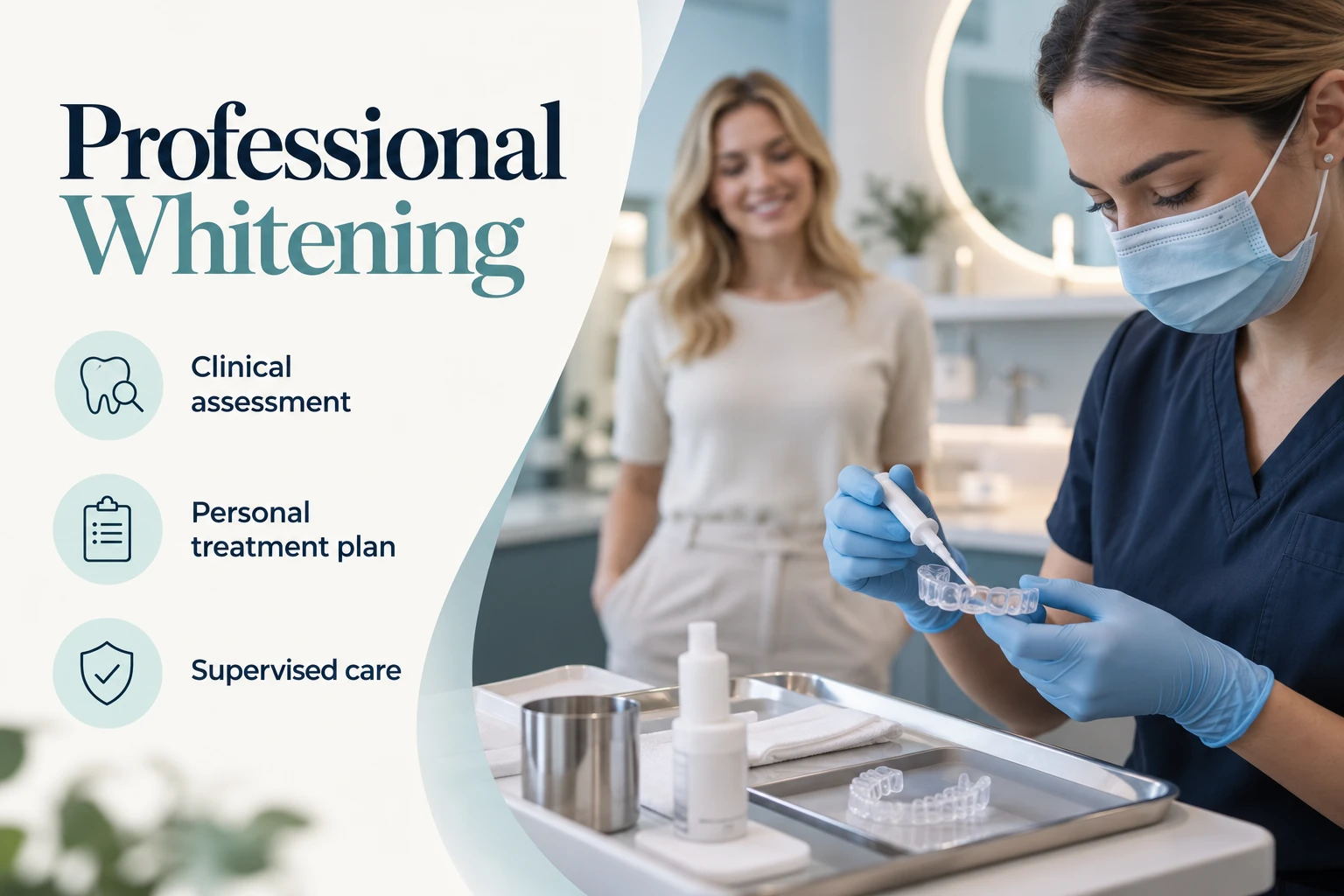
A defining characteristic of tooth whitening in the UK is its strict, patient-first regulatory framework. By law, tooth whitening is considered the practice of dentistry. This means it must only be carried out by registered dental professionals, such as dentists, dental hygienists, or dental therapists.
This strict regulation ensures that health comes first. Patients undergo a comprehensive dental examination before any treatment begins to confirm their teeth and gums are healthy enough for the procedure. The UK strictly controls the concentration of hydrogen peroxide and carbamide peroxide used in treatments, ensuring safe chemical limits that protect enamel and surrounding tissues.
Professional oversight prevents the severe enamel damage, sensitivity, or chemical burns that are often associated with illegal practitioners or unverified over-the-counter kits. Professional whitening and non-professional approaches may appear similar on the surface, but the differences are significant in terms of safety, effectiveness, and overall oral health.
A key advantage of professional whitening is the comprehensive assessment conducted beforehand. A dental professional evaluates the condition of the teeth and gums, checking for issues such as tooth decay, gum inflammation, worn enamel, cracks, exposed roots, or existing restorations. Whitening is only recommended if the mouth is healthy. If underlying problems are present, they are addressed first. This step is crucial because whitening on compromised teeth can increase sensitivity, cause discomfort, or lead to uneven results.
In contrast, non-professional methods such as generic trays, strips, and over-the-counter gels do not include personalised evaluation. These products are designed for mass use and cannot account for individual dental variations. Ill-fitting trays may allow whitening gel to contact the gums, irritating them. Strips may not adhere evenly, resulting in patchy whitening. Without professional guidance, individuals may also overuse products in an attempt to achieve faster results, increasing the risk of sensitivity or enamel damage.
How the Treatment Works
Professional tooth whitening focuses on safe, regulated, and clinically proven approaches that respect both oral health and aesthetic balance. The treatment works by breaking down stain molecules in enamel and dentine, gradually lightening the teeth while maintaining their natural translucency.
Whether using custom-fitted trays for gradual at-home whitening or advanced in-clinic light-activated sessions, professional treatments use high-quality gels that safely penetrate the enamel to break down complex stain molecules gently. The controlled setting allows for precise application and monitoring, making it particularly effective for surface stains caused by food, drinks, or natural ageing.
Modern whitening formulations are carefully developed to penetrate enamel safely and break down stain molecules without harming the underlying tooth. Clinical assessment ensures that the procedure is suitable for the individual before any treatment begins. Whitening agents used by dental professionals are formulated within legally permitted concentrations, designed to deliver visible results while protecting the enamel and surrounding gum tissue. This balance between strength and safety is essential for achieving predictable improvements without causing harm.
Who Is Suitable

A healthy mouth is essential before beginning any whitening procedure. Untreated decay, active gum disease, enamel erosion, or exposed dentine should be addressed first to ensure both safety and comfort. In some situations, such as pregnancy or specific medical conditions, postponing treatment may be advisable. A professional evaluation helps determine whether whitening is appropriate at that time.
Professional cleaning removes plaque and calculus that can block whitening agents from working evenly across the tooth surface. Addressing existing sensitivity beforehand can also improve comfort throughout the process. Ultimately, whitening works best as part of a broader commitment to good oral hygiene and long-term dental care.
By identifying the type and cause of discoloration, whether extrinsic surface staining or deeper intrinsic staining, the treatment plan can be tailored to the individual. Every smile is unique, and treatment should be tailored accordingly. The focus remains on enhancing natural beauty while safeguarding dental health.
Understanding Tooth Discoloration
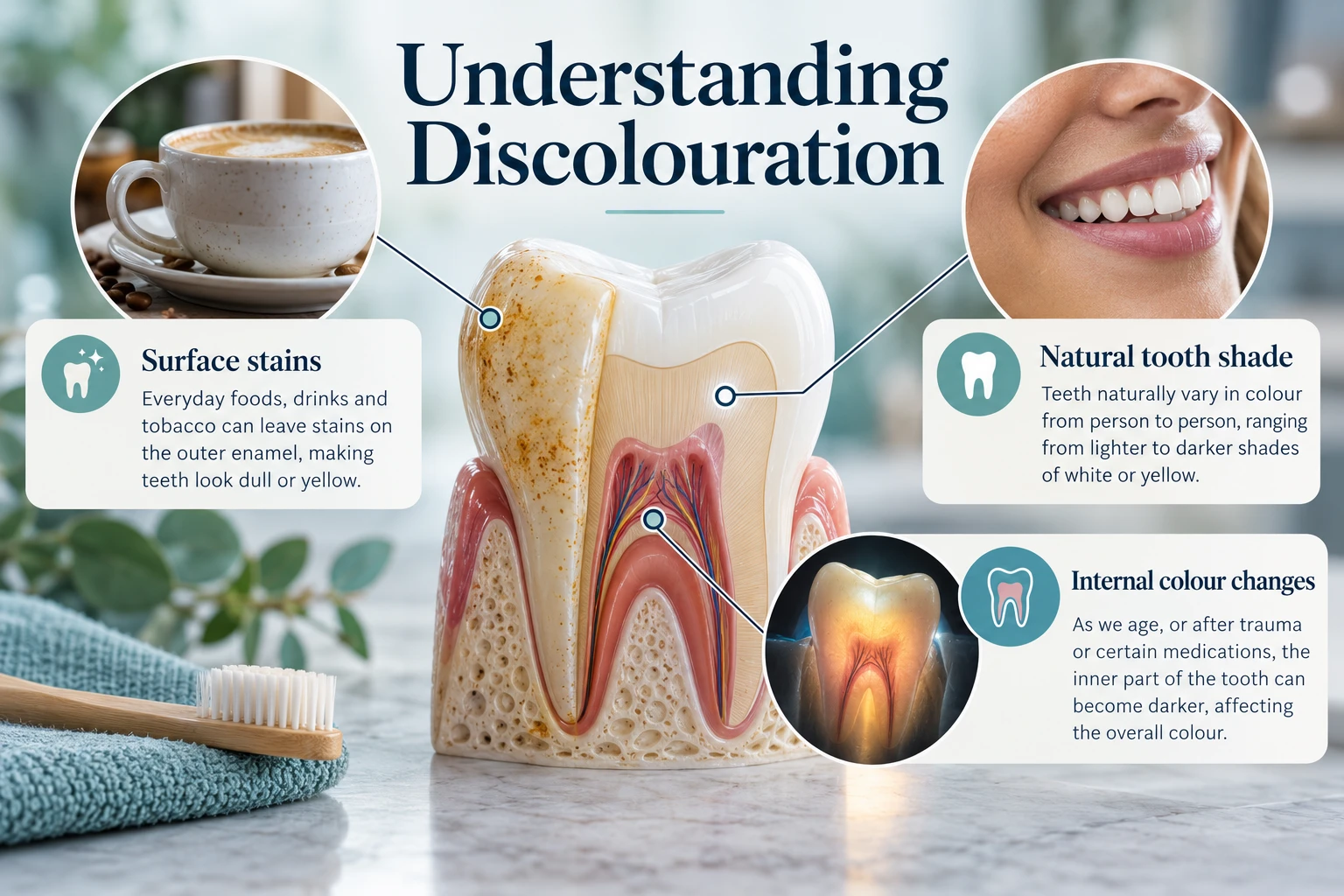
Tooth staining is often a slow, cumulative process that goes unnoticed until years of habits or biological changes become visually evident. Teeth are never naturally snow-white. Instead, they form in various shades dictated by genetics, the thickness of the translucent outer layer enamel, and the natural colour of the softer core layer beneath it.
Extrinsic Discoloration (Surface Stains)
Extrinsically stained enamel occurs when pigmented molecules known as chromogens attach to the protein pellicle layer on the outer surface of the tooth. This is most frequently caused by the daily consumption of highly pigmented foods and beverages such as coffee, dark teas, red wine, colas, and dark berries. Smoking or chewing tobacco, as well as poor oral hygiene that allows plaque and tartar to build up, heavily accelerates this process.
These surface-level stains typically manifest as a yellow, light brown, or dull film over the teeth. Because the stain is purely on the exterior, extrinsic discoloration responds exceptionally well to standard tooth-whitening procedures, whitening toothpastes, and routine professional dental cleanings.
Intrinsic Discoloration (Internal Stains)
Intrinsic discoloration is a bigger structural change that develops within the interior of the tooth, primarily altering the colour of the dentin itself. This can result from physical trauma which may cause the tooth's internal nerve to bleed or die, the use of certain medications such as tetracycline antibiotics taken during childhood while teeth are forming, or fluorosis, which is excessive fluoride exposure during tooth development.
Because the stain is deep inside the tooth's structure, intrinsically stained teeth often appear fundamentally darker, taking on a gray, blue, or unevenly banded hue. Traditional surface whitening is much less effective for internal stains. Depending on the severity, a professional evaluation is required. Treatments might include deep, specialized internal bleaching or cosmetic restorations, such as porcelain veneers or dental crowns, to mask the discoloration.
Age-Related Discoloration (Combined Factors)
As we age, our teeth naturally darken due to an unavoidable combination of both extrinsic and intrinsic influences. Over decades of daily wear and tear from chewing and brushing, the bright, translucent enamel gradually thins out. Simultaneously, the underlying dentin changes, naturally darkening and thickening over time. As the enamel shell becomes thinner and more transparent, the darker, yellower dentin beneath becomes increasingly visible.
Age-related dullness can still be significantly improved with professional whitening to lift decades of accumulated surface stains. However, because enamel thinning cannot be reversed, the degree of whitening achieved will naturally vary from person to person.
Why Teeth Lose Their Brightness Over Time
Teeth are naturally designed to withstand years of chewing, temperature changes, and exposure to different foods and drinks. However, over time, it is completely normal for them to lose some of their original brightness. Even individuals who maintain excellent oral hygiene may notice gradual changes in shade. This happens because tooth colour is influenced by a combination of daily habits, natural ageing, and underlying biological factors.
One of the most common reasons for dullness is everyday exposure to staining substances. The outer layer of the tooth, known as enamel, may look smooth to the eye, but under magnification it contains microscopic pores. These tiny openings can absorb pigments from deeply coloured foods and beverages. Items such as tea, coffee, red wine, berries, and richly spiced meals can slowly deposit staining particles into the enamel. Over time, these pigments build up and alter how light reflects from the tooth surface. Tobacco use can significantly accelerate this process, leading to more noticeable discoloration.
Natural ageing is another important factor. Enamel does not regenerate once it is formed. As years pass, it gradually becomes thinner due to normal wear from chewing and brushing. Beneath the enamel lies dentine, a naturally yellow-toned layer of the tooth. As enamel thins, more of this underlying dentine becomes visible, making teeth appear darker or more yellow, even if they are perfectly healthy. This is a structural change rather than a hygiene issue.
Medical and developmental factors can also influence tooth shade. Certain antibiotics taken during childhood, particularly during the years when teeth are forming, can cause intrinsic tooth staining. Dental trauma may lead to internal colour changes, especially if the nerve has been affected. Additionally, older dental restorations such as fillings, crowns, or bonding materials do not respond to whitening treatments and may appear mismatched over time.
Because tooth discolouration can stem from multiple causes, professional assessment is essential before considering whitening. Understanding the underlying reason ensures realistic expectations and helps determine the safest and most effective approach to restoring brightness.
Treatment Options and What to Expect
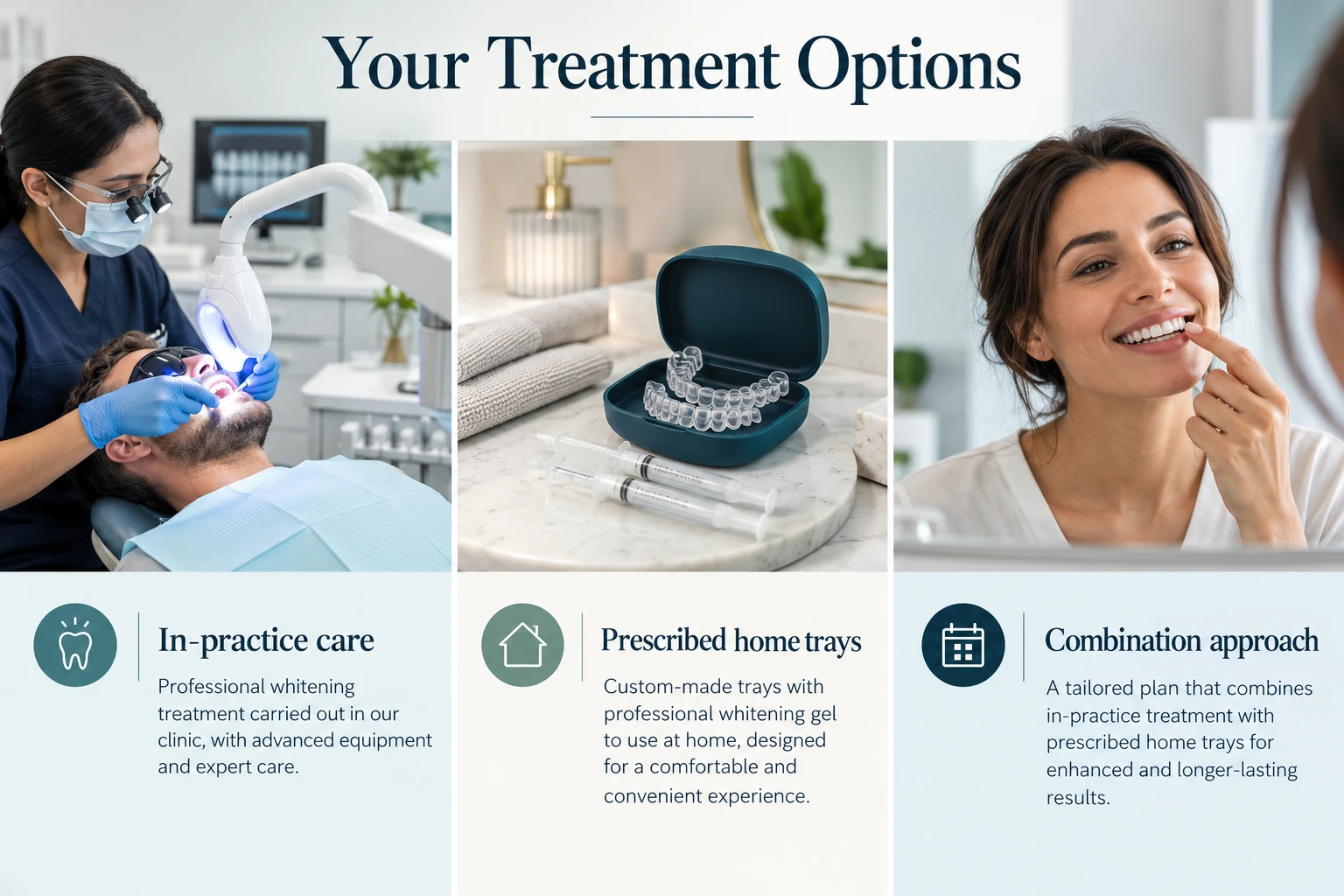
Professional tooth whitening offers several regulated treatment options designed to improve smile brightness while protecting long-term oral health. Because whitening is considered a dental procedure in the UK, it must comply with strict clinical guidelines to ensure safety and effectiveness. Understanding the available options helps individuals choose the most suitable approach based on their goals, lifestyle, and dental condition.
In-Practice Whitening
In-practice whitening is one of the most popular professional treatments. It is performed in a clinical environment where whitening gel is carefully applied to the teeth under direct supervision. Protective barriers are placed to shield the gums and surrounding soft tissues. The controlled setting allows for precise application and monitoring, making it particularly effective for surface stains caused by food, drinks, or natural ageing. Many patients notice visible improvement after a single visit, making it an attractive option for those seeking quicker results.
Dentist-Prescribed Take-Home Whitening
Dentist-prescribed take-home whitening provides a more gradual alternative. Custom-made trays are created to fit the individual's teeth accurately, ensuring even gel distribution and reduced gum irritation. Patients use the trays over a recommended period, allowing the shade to lighten progressively. This method offers flexibility and comfort while still being supervised by a dental professional. It is often preferred by individuals who want to control the whitening pace or have mild to moderate discoloration.
Combination Whitening
Combination whitening merges both approaches. An initial in-practice session jumpstarts the whitening process, followed by a structured home routine to maintain and enhance the results. This balanced method can improve longevity and provide a more stable shade transition over time.
While non-professional products such as strips, pens, or generic trays are widely available, their results can be inconsistent. Without a personalised dental assessment, issues like decay, gum inflammation, or intrinsic staining may go undetected. Ill-fitting trays can lead to uneven whitening or increased sensitivity. Professional whitening stands apart by combining regulated formulations, tailored treatment planning, and clinical oversight. This ensures not only noticeable cosmetic improvement but also the preservation of enamel integrity and overall oral health.
Realistic Results and Expectations

Tooth whitening is designed to enhance the natural colour of your smile, not to create an artificial or overly bright appearance. Results vary from person to person because every smile is unique. The thickness of enamel, the type and depth of staining, and the original shade of the teeth all influence how dramatically they will lighten. Most individuals notice a clear improvement, often several shades brighter, while maintaining a natural, healthy look.
Whitening results typically develop progressively rather than appearing instantly perfect. Even after treatment is completed, teeth may continue to stabilise in shade as they rehydrate and regain their natural moisture balance. This gradual process helps ensure the outcome looks authentic and balanced with your overall facial features. The goal is refinement and brightness, not an unnatural white tone.
It is important to understand that whitening treatments affect only natural tooth enamel. Dental restorations such as crowns, veneers, composite fillings, and bonding materials do not change colour. If these are present, they may appear slightly darker compared to newly whitened teeth. For this reason, treatment planning should always consider existing restorations to ensure a harmonious final appearance.
Temporary sensitivity can occur during or shortly after whitening. This is generally mild and short-lived. As the teeth rehydrate and the mineral balance within the enamel returns to normal, sensitivity usually resolves without intervention. A professional assessment identifies any pre-existing issues, such as enamel wear or gum recession, that could increase discomfort. Controlled application techniques, appropriate gel concentrations, and aftercare advice significantly reduce the risk of prolonged sensitivity.
The most successful whitening results are those that look effortless. A healthy smile does not need to appear extreme to be impactful. Often, subtle brightness creates the most elegant and timeless impression. Enhancing what already exists naturally builds confidence. Ethical whitening aims to enhance the existing shade of teeth rather than create an unrealistic colour. The goal is improvement, not exaggeration. Professional guidance ensures that the final result complements natural features, skin tone, and overall facial harmony. Subtle refinement often delivers the most sophisticated outcome.
Safety and Professional Standards
Safety and regulation are central to professional whitening in the UK. Strict legal standards govern who can provide treatment and how whitening agents are used. These regulations are in place to protect patients and ensure ethical practice. Professional whitening follows evidence-based protocols, with protective measures used during treatment to shield the gums and soft tissues.
When carried out under professional supervision, whitening does not weaken tooth structure. Modern whitening formulations are carefully developed to penetrate enamel safely and break down stain molecules without harming the underlying tooth. Clinical assessment ensures that the procedure is suitable for the individual before any treatment begins.
Ultimately, choosing professional tooth whitening in the UK guarantees an approach that values the longevity of your oral health just as much as the beauty of your final smile. Professional whitening is about more than achieving a brighter smile. It is a controlled, carefully monitored process that prioritises comfort, natural-looking results, and long-term oral health preservation over exaggerated or unrealistic brightness.
Responsible practice avoids unnecessary intervention and respects natural anatomy. Over-whitening or pursuing unrealistic shades can compromise both aesthetics and comfort. A clinically guided approach ensures that results remain balanced and harmonious. Education plays a vital role, allowing individuals to understand the process, benefits, and limitations clearly before proceeding.
Aftercare and Maintaining Results
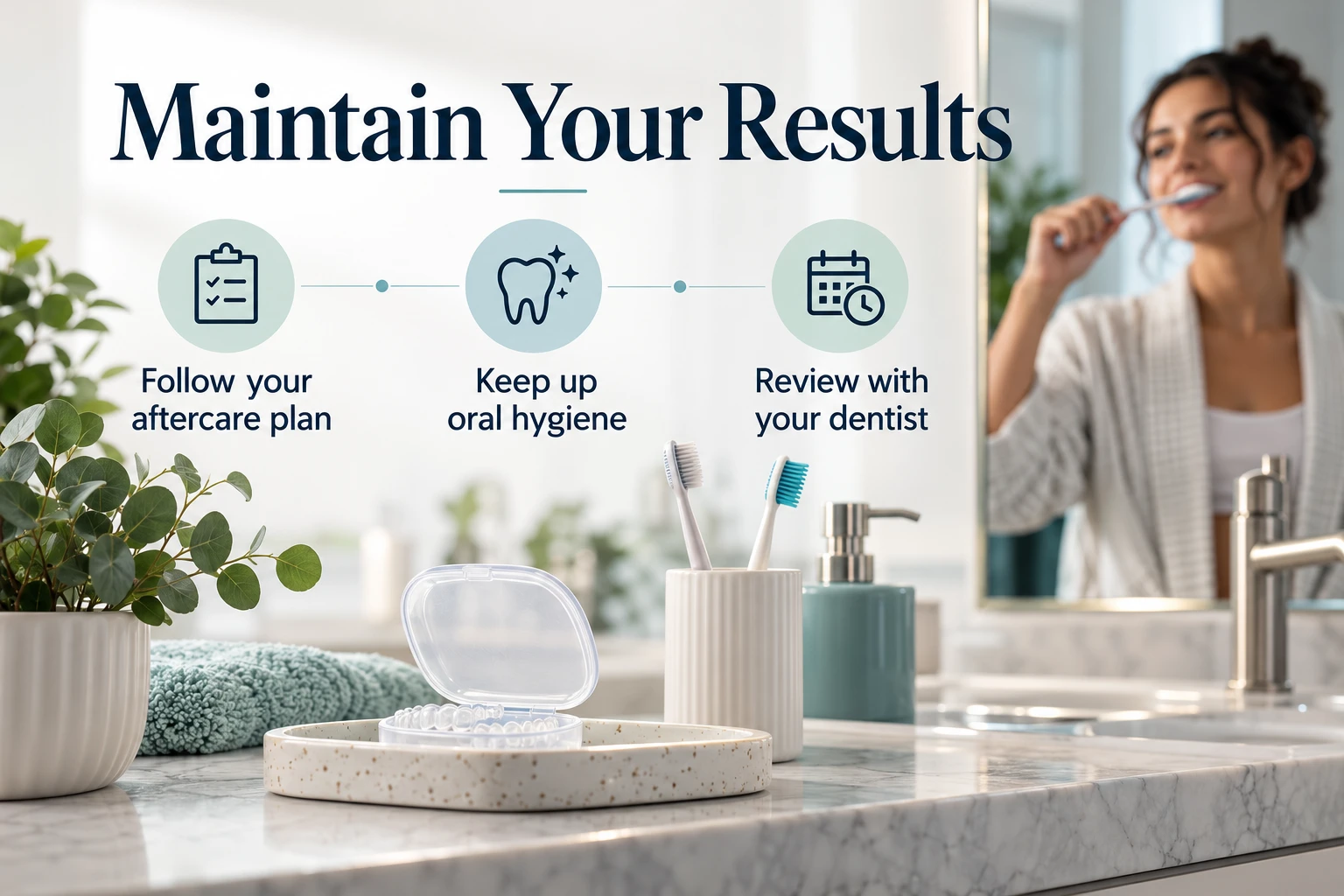
Professional tooth whitening can deliver a noticeably brighter smile, but maintaining those results requires consistent care and mindful habits. Whitening is not permanent because teeth are naturally exposed to staining substances every day. Over time, pigments from food, drinks, and lifestyle choices can gradually settle back into the enamel. Understanding this helps set realistic expectations and encourages a proactive approach to preservation.
Daily oral hygiene is the foundation of long-lasting whitening results. Brushing twice a day with fluoride toothpaste, flossing regularly, and attending routine dental check-ups all help keep enamel clean and healthy. Plaque build-up can trap pigments, making teeth appear dull more quickly. By maintaining a thorough cleaning routine, you reduce the likelihood of rapid re-staining and help preserve the clarity achieved through whitening.
Dietary awareness also plays a significant role. Strongly pigmented foods and beverages such as coffee, tea, red wine, berries, and certain sauces can gradually darken enamel. This does not mean these items must be avoided completely, but moderation is important. Rinsing the mouth with water after consuming staining substances can help minimise pigment absorption. Using a straw for darker beverages may also reduce direct contact with teeth. These small adjustments can extend the longevity of whitening results without compromising daily enjoyment.
Periodic professional maintenance treatments can safely refresh brightness if minor staining returns. These are typically less intensive than the initial whitening procedure and are designed to support enamel health while maintaining colour consistency. Viewing whitening as part of a long-term oral care strategy rather than a one-time cosmetic event ensures a balanced and sustainable approach.
Whitening can also motivate improved oral hygiene habits. When individuals see visible results, they are often more committed to maintaining them. This increased attention to brushing, flossing, and regular dental visits supports overall oral health. In this way, whitening can catalyze better long-term dental care.
Frequently Asked Questions
When carried out under professional supervision, whitening does not weaken tooth structure. Modern whitening formulations are carefully developed to penetrate enamel safely and break down stain molecules without harming the underlying tooth. Clinical assessment ensures that the procedure is suitable for the individual before any treatment begins.
Ethical whitening aims to enhance the existing shade of teeth rather than create an unrealistic colour. The goal is improvement, not exaggeration. Professional guidance ensures that the final result complements natural features, skin tone, and overall facial harmony. Subtle refinement often delivers the most sophisticated outcome. A well-whitened smile should still look natural and harmonious with your overall appearance.
While some individuals may experience temporary sensitivity following whitening, this is usually mild and short-lived. A professional assessment identifies any pre-existing issues, such as enamel wear or gum recession, that could increase discomfort. Controlled application techniques, appropriate gel concentrations, and aftercare advice significantly reduce the risk of prolonged sensitivity. With proper planning, whitening can be both comfortable and effective.
Whitening is not a substitute for dental treatment. It does not repair cavities, address gum disease, or correct structural concerns. Whitening enhances colour, but it relies on healthy teeth and gums for optimal results. A comprehensive dental evaluation ensures that any underlying issues are managed before cosmetic treatment begins.
Whitening is not permanent because teeth are naturally exposed to staining substances every day. Over time, pigments from food, drinks, and lifestyle choices can gradually settle back into the enamel. With proper maintenance, including good oral hygiene and dietary awareness, results can be preserved for extended periods. Periodic professional maintenance treatments can safely refresh brightness if minor staining returns.
Whitening treatments affect only natural tooth enamel. Dental restorations such as crowns, veneers, composite fillings, and bonding materials do not change colour. If these are present, they may appear slightly darker compared to newly whitened teeth. For this reason, treatment planning should always consider existing restorations to ensure a harmonious final appearance.
Patient Experiences

A key benefit of professional tooth whitening is the confidence it can inspire. Many people report feeling more comfortable smiling in photographs, speaking in public, or engaging socially after treatment. This boost in confidence often comes from knowing their smile looks healthy and cared for, rather than dramatically altered.
While whitening is often viewed as an aesthetic enhancement, its benefits can extend beyond appearance. A brighter smile can have a meaningful psychological impact. Many individuals report feeling more confident in both personal and professional settings after whitening. Smiling more freely can positively influence social interactions and self-perception.
Teeth play a central role in facial expression. Subtle brightness improvements can refresh the overall appearance without altering the natural identity. Unlike more invasive cosmetic procedures, whitening preserves the original shape and structure of the teeth. The enhancement is understated yet noticeable, resulting in a cleaner, more vibrant look.
Our Approach to Patient Care
Professional tooth whitening represents more than a cosmetic procedure. It reflects a philosophy grounded in professionalism, transparency, and patient-centred care. Ethical whitening begins with careful assessment and honest discussion. Every smile is unique, and treatment should be tailored accordingly. The focus remains on enhancing natural beauty while safeguarding dental health.
Responsible practice avoids unnecessary intervention and respects natural anatomy. Over-whitening or pursuing unrealistic shades can compromise both aesthetics and comfort. A clinically guided approach ensures that results remain balanced and harmonious. Education plays a vital role, allowing individuals to understand the process, benefits, and limitations clearly before proceeding.
Trust is built through realistic expectations and open communication. Whitening outcomes should feel satisfying and authentic rather than dramatic or excessive. The objective is refinement that aligns with the individual's personality and lifestyle.
Professional tooth whitening focuses on safe, regulated, and clinically proven approaches that prioritise oral health alongside aesthetic improvement. In the UK, whitening treatments must comply with strict guidelines to ensure patient safety. This means that appropriate products, controlled concentrations, and professional supervision are central to achieving predictable and healthy results. A proper assessment is always important before beginning treatment, as it allows dental professionals to evaluate the condition of the teeth and gums, identify the type of staining, and determine the most suitable approach.
Next Steps and What to Know

Before considering tooth whitening, understanding the process and what it involves is essential. Professional whitening is designed for individuals with healthy teeth and gums who wish to improve the brightness of their natural smile. Because tooth discolouration can stem from multiple causes, professional assessment is essential before considering whitening. Understanding the underlying reason ensures realistic expectations and helps determine the safest and most effective approach to restoring brightness.
Preparation plays an important role in achieving consistent results. Professional cleaning removes plaque and calculus that can block whitening agents from working evenly across the tooth surface. Addressing existing sensitivity beforehand can also improve comfort throughout the process. Ultimately, whitening works best as part of a broader commitment to good oral hygiene and long-term dental care.
The decision to pursue whitening should be made with clear information about the benefits, limitations, and maintenance required. Professional guidance ensures that expectations are realistic and that the chosen approach aligns with individual dental health and aesthetic goals. A comprehensive evaluation provides clarity on whether whitening is appropriate and what results can reasonably be achieved.
A Confident, Natural Smile
The most successful whitening results are those that look effortless. A healthy smile does not need to appear extreme to be impactful. Often, subtle brightness creates the most elegant and timeless impression. Enhancing what already exists naturally builds confidence.
Professional tooth whitening represents a balanced approach to cosmetic dentistry, one that values safety, subtlety, and long-term oral health. By restoring brightness lost through time and lifestyle, whitening helps create a refreshed appearance that feels authentic. A brighter smile does not need to look artificial. It simply needs to look like you, at your very best.
Professional tooth whitening stands for safe, responsible, and professionally guided whitening that respects both appearance and long-term health. A brighter smile should feel comfortable, natural, and genuinely yours, an enhancement that supports confidence while preserving the integrity of your teeth.